Do you know the best way to get others to do what you need them to do?

Knowing what you need done is important, of course, as is being willing to delegate those tasks to others in the first place. It also helps if you know how to delegate well, and if you have processes and procedures in place that make your team’s jobs easier.
But none of that is the #1 most important thing you can do to get others to do what you need them to do.
The #1 most important thing you can do to get what you need out of others is to make sure they have what they need to thrive.
Why Bringing Out the Best in Others is Key
Take a few seconds to think about your best days at work. For me, they’re the days where I feel driven, connected and capable. I’m getting things done, and those things are important. They make a difference—a real difference.
Not only are those my most productive days; they’re the days that energize me and give me a sense of deep satisfaction. Those days make me want to tackle the next important thing. They make me want to tackle bigger, even more important things.
Those are the kinds of days you want to give your team.
You do that by bringing out the best in each and every one of them. Let’s look at how.
Assess how your team members are doing.

My favorite tool for assessing pretty much anything is the traffic light approach: gauging whether the status of something is red, yellow or green. When you’re evaluating team members, it looks like this:
- Red: The team member has serious performance issues, usually because they lack skills, motivation or a healthy attitude but possibly because they need adjustments to workload or support. These are also called C Players.
- Yellow: The team member is getting their job done, but there are issues with work quality, meeting deadlines or adaptability. They could also be doing a perfectly adequate job, but they aren’t growing or innovating. These are your B Players.
- Green: These A Players are top performers who rock their jobs, bring solutions and drive growth and culture.
Once you’ve determined how a team member is doing in their job, the next step is to have next steps:
- For red team members, put together a probation plan with check-ins at 30, 60 and 90 days to help them step up or step out. During that time, you’ll be able determine whether they can be coached up in their current position or moved to another one that’s a better fit, whether their workload is poorly matched to their position or the expectations set when they were hired, or whether they’re a bad fit for your organization’s culture and need to be moved out.
- Work with yellow team members to develop a plan to become green. That could include adding or developing skills, improving time management, learning how to identify challenges and create solutions, and knowing where to get support. Though this kind of development plan will have a different feel and focus from a red team member’s probation plan, it’s important to have check-ins at 30, 60 and 90 days here, too.
- Whatever you do, don’t take your green team members for granted! A Players like to be challenged; they want to keep growing. Be sure they know how much you appreciate them, and work with them to achieve their career goals. More on that below.
Pro Tip: By the way, a vital part of bringing out the best in others is to recognize their strengths. We all have things we can work on, but we also—I hope!—all have things we do well. When you work with a team member to develop a go-for-green plan, complement what they do well and help them lean into those strengths.
Also, be sure you’re matching your leadership and management style to your team member’s developmental level. A book I love for this is Leadership and the One Minute Manager by Ken Blanchard, Patricia Zigarmi and Drea Zigarmi.
Later, I’ll share the main tool for helping your yellow team members become green and helping green team members become even greater, but first I want to point out that the next steps that come out of a red-yellow-green assessment are often your next steps. They’re the next steps a team member needs to take to succeed at the responsibilities of their current role.
But A Players aren’t the only ones who have ambitions. Most of us want more from our future and career. If you want to bring out the best in your team, you need to understand their goals for themselves. You need the 5 Drivers™
Use the 5 Drivers™ to understand your team members’ future and career goals.
The 5 Drivers™ is a tool I developed to help business owners build successful, sustainable businesses while living a full life. Here’s what it looks like for a business:
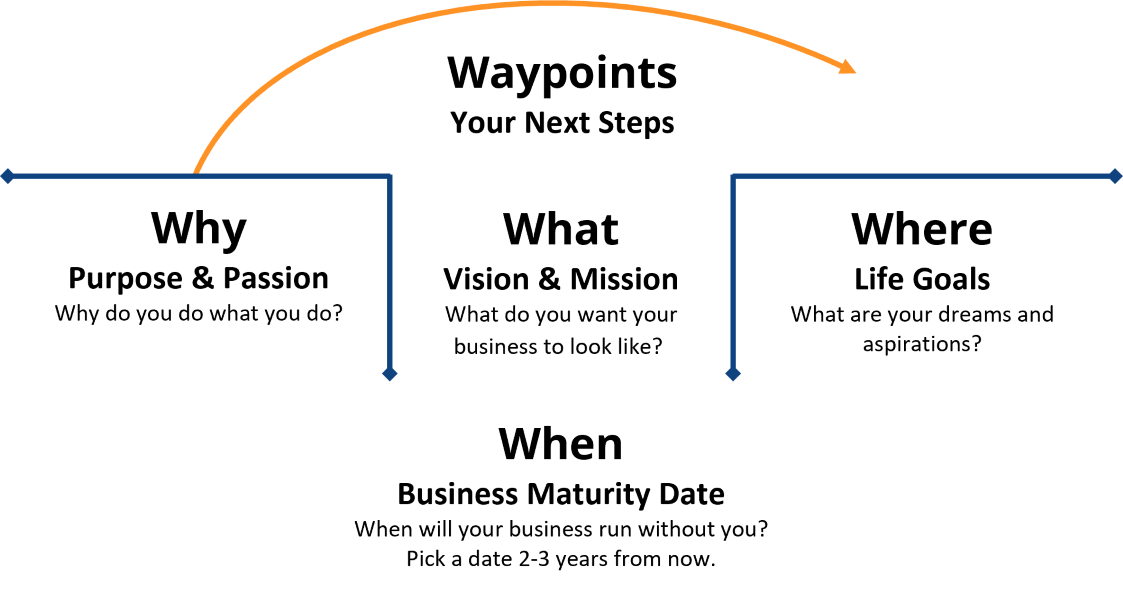
One thing I’ve always loved about the 5 Drivers™ approach is how adaptable it is. In this case, you can use it to uncover a team member’s larger ambitions for their career by understanding:
- Why they do what they do: what they love not just about their job but about the industry they’re in
- Where they want to be in their career: what roles they’re interested in, what skills they want to learn, how they want to grow and evolve
- What tools and education they need to have to reach their goals
- When they want to make their goals happen
- Their Waypoints, or the next three-to-five steps they need to take to achieve their goals
Those Waypoints are where you come in. Whether they want a promotion, to take on a more advanced project or to do their current job more efficiently and effectively, how can you help? What tools, education, mentors, connections or coaching can you provide?
When I work with businesses, we often do the 5 Drivers™ in one sitting because it’s going to be the roadmap for everything else. With a team member, you can take that kind of workshop approach or you can use the 5 Drivers™ as part of the framework for your monthly mentoring meetings.
What monthly mentoring meetings, you ask? That’s the tool I mentioned above, the one that brings out the best in your team members by helping them go for green. Monthly mentoring meetings are also great for helping team members achieve their career goals.
Use monthly mentoring meetings to help your team members to go for green and achieve their goals.
How often do you check in with individual team members? I don’t mean in passing, by leaning your head in the door or shooting someone a text to see how a project’s going. I don’t want to minimize the importance of those casual touchpoints. They’re important and definitely help team members feel connected and get feedback when they need it.
But to truly bring out the best in others, you need more formal sit-downs.
I talk about monthly mentoring meetings in my blog Creating a Culture of Connection for Your Association, in a section helpfully titled Holding Monthly Mentoring Meetings. I encourage you to check out that article if you haven’t already, but because monthly mentoring meetings are so important in bringing out the best in others, let’s revisit it here:

Monthly mentoring meetings are regularly scheduled sit-downs with a formal agenda. The purpose is twofold: for you to have confidence that your team member is on top of their work, that they have the tools and skills they need to do that work and that they have the support and resources they need to address challenges; and for your team member to share successes and roadblocks while feeling heard and supported.
That may sound like a tall order, but you can accomplish it with just five questions:
- What successes have you had since our last meeting?
- What would you like to accomplish next?
- What are the next three steps you need to take to accomplish each of those things?
- What challenges do you have that you need help with?
- What resources—equipment, money, volunteers, knowledge—do you need to be successful?
At the end of the meeting, lay out the actions you’ll take to make sure your team member gets the tools, resources and support they need. Also set a date for your next meeting.
At some point while you’re together, don’t forget to ask the important sixth question: How are you doing? This is not a business question. This is a personal question, and it’s important. It shows your team member that you see them as an individual human being, not just as a cog in the machine.
It’s so important, it gets a whole section itself:
See your team members as human beings.
We are all human beings. We all have things in our life that are sad and happy, invigorating and hard, distracting and motivating. Sometimes we have all of those things at once. Sometimes, we have one thing that completely overwhelms us. Some people like to share; others are more reserved.
Either way, part of your job as a leader is connecting with the people you work with.
When someone knows you care about what’s going on with them, they feel like you’re invested in them, that you want them to succeed and that you’ll help them reach their goals. That makes them feel valued. It also makes them feel safe—and people who feel safe put more of themselves into everything they do, including their work.
Building this kind of connection isn’t something that comes naturally to all of us. That’s why I have a section about Caring Calls in the blog I mentioned earlier. Definitely check it out. I also have a great one-sheet on Caring Questions, which shares questions that help you get to know someone initially, as well as the kind of questions that build deeper, fuller relationships. If you’d like a copy,
Now that we’ve talked about connecting, let’s talk about disconnecting.
Let go and give your team members room to succeed.

You’ve assessed your team members, so you know where they are in their ability to do their job. You’ve made sure they have the tools, skills, resources and support they need. You’ve let them know you care and that you’re there for them.
Now it’s time to back off.
I know this can be hard, but if you’ve done everything I’ve laid out here, you can give your team members space with confidence. Here’s a mantra, if you need a little help:
This person is not me. They have their own style, their own approach. They have the tools they need, and they know they can come to me if they need help. I’ll be checking in with them in just a few weeks at our monthly mentoring meeting.
Repeat as often as necessary—and if that’s not enough,
Bringing It All Together to Bring Out the Best in Others
A chain is only as strong as its weakest link. If you want your organization to thrive and achieve its Vision and Mission, the most effective and efficient—and easiest—way to do that is by having a team that can deliver. That means bringing out the best in them by:
- Assessing them red-yellow-green so you have a good handle on their current abilities and what they need to step it up
- Using the 5 Drivers™ to understand what their ambitions are for their job and their career
- Meeting monthly for a formal check-in to celebrate successes, identify challenges and lay out next steps
- Connecting with them on a personal level
- Stepping back and let them fly on their own
If I can help you bring out the best in yourself so you can bring out the best in your team, please